Showing posts with label Sucre. Show all posts

Sunday, December 19, 2010

Candelaria and Tarabuco - Our Last Tour Day


On the way out of Sucre to Tarabuco, we drove on a highway that marked the continental divide.  On one side of the road, our tour guide told us, water flowed to the Pacific, and on the other side to the Amazon Basin and to the Atlantic.  Amazing!  We stopped by the side of the road to see these roadside shrines.  Since it was close to November 2, All Saints Day, many of the shrines contained offerings.


We went to the market in Tarabuco.  Our guide, Lisbeth, showed us around the market.  Here she is holding hats that are based on Colonial Spanish armor - hats of the conquistadors. 


One vendor was selling knitted beanie hats.


Synthetic dyes were available.


There were lots of farmers selling their vegetables,


and some meat was for sale.


I bought this coca bag I showed in the last post from this man.


Of course, I can't resist purses and bags.  I have way too many of them.


I bought several belts, thinking, of course, they make great purse straps.


This cute couple was enjoying the afternoon in the town square.

After the market, we headed to Candelaria, to a hacienda that has been in Lisbeth's family for over 100 years.


We had a beautiful lunch.


This is Lisbeth's mother, who still lives at the hacienda part of the time.


Here is one of the cooks wearing the conquistador-style hat.


These grinding stones were just outside the kitchen and still used today.


The chapel was being used for grain storage while the roof on the original storage room was being repaired.  The chapel had an alter and wreaths dating from the early days of the hacienda.


Some of the local boys showed us their traditional dances.  On their shoes are exaggerated spurs, also reflecting the influence of the conquistadors.

After our visit to the Candelaria hacienda, we stopped by our last weaving co-op.  This was the only co-op where we saw weaving that appeared to be of cotton.  I bought a couple of these bags.


We had a late drive back to Sucre.  This was our last day of sightseeing.  The next day we would fly back to La Paz, starting our journey home.  I'm still trying to absorb all the sights and experiences of my first trip to South America.

Friday, December 17, 2010

Sucre and Potosi


Our base of operations in Sucre was this beautiful old Colonial hotel, Parador Santa Maria la Real.


The hotel had a wonderful rooftop courtyard with a view of the city.


One of the highlights of Sucre was the textile museum.  There were wonderful displays showing the different textiles from the regions surrounding Sucre.  On our day trips out of Sucre, most of the weavings we saw were either of the Tarabuco or Jalq'a people.


The photo above is of a Tarabuco weaver who was working at the museum.  The hat she has on is called a "tadpole" and signifies that she is an unmarried woman.  The black flap on the side is the tadpole's tail.


The Tarabuco women weave panels with very intricate animals, people, landscapes, and buildings.  Sometimes the weavings tell a story.  Some of the panels are used as a decorative edging on the women's skirts. 


These bags are used by men to carry coca leaves. There is often a very small pocket for carrying the ash catalyst.


I suspect this purse below was almost like a sampler.  A younger weaver might have been learning the patterns for the various figures as she wove one row of each. 


This woman is from the Jalq'a group.  Jalq'a weavings are traditionally red and black and feature writhing mythical demons and pregnant animals.


In Sucre we explored the town square and did some shopping.


The following day we took a drive to Potosi, famous for its silver mines.  Our guide told us that during the 1600's, Potosi was a larger city than Paris or London.  Potosi is at 13,500' elevation, the highest town of its size in the world.


The mountain at the end of this street held the main silver deposits.


We visited the Mint Museum there.  Near the entryway is this painting of the Pacha Mama (Mother Earth) in the shape of the mountain.


The Spanish minted coins in Potosi.


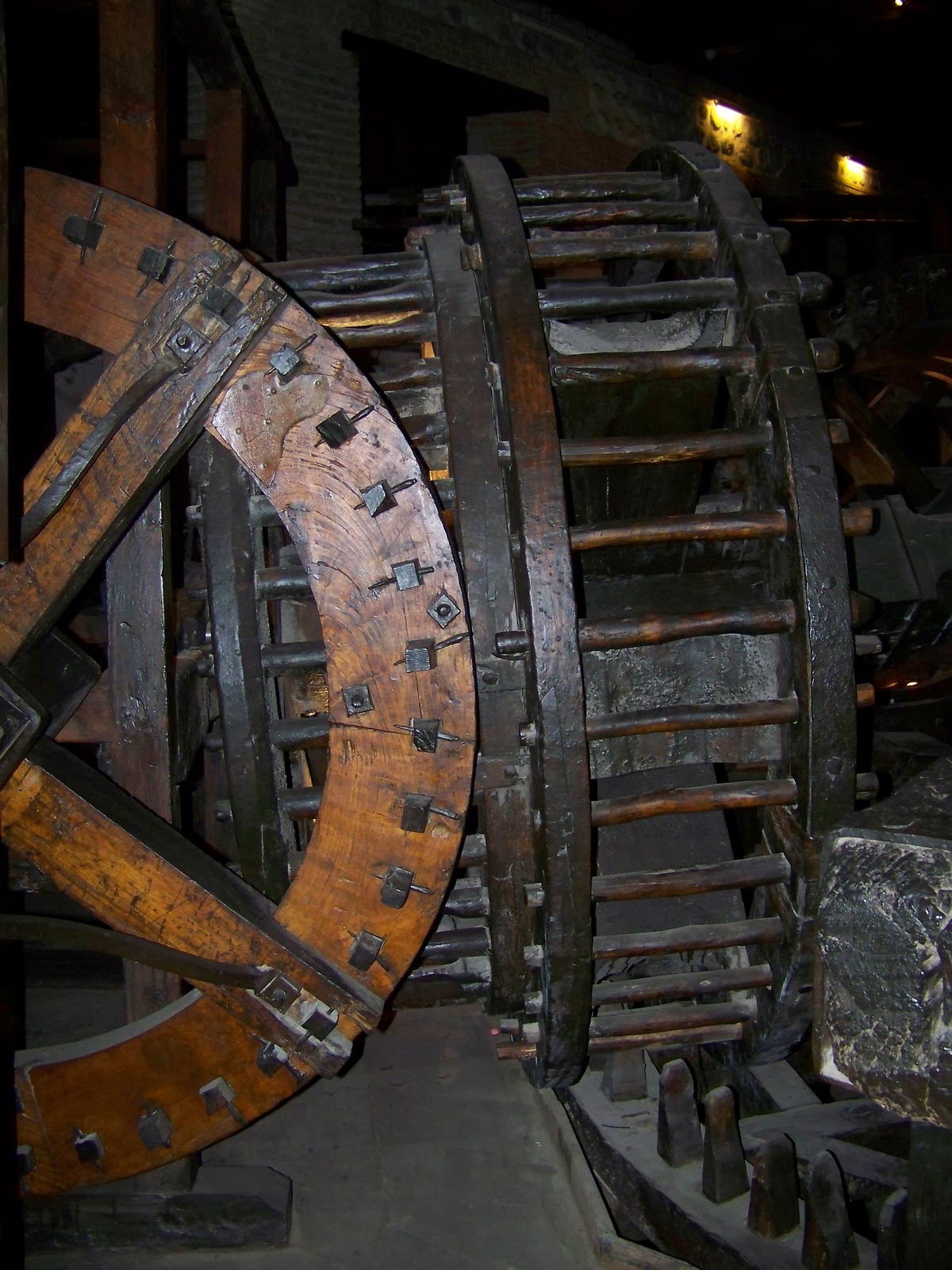
Much of the minting machinery was brought to Potosi all the way from Spain.


The mask on the building represents the local man who lead the Spanish to the silver deposits.  He has become the sort of mascot of Potosi.


We visited the miner's market.  It is customary for visitors to the mines to bring gifts to the miners, usually cigarettes, alcohol and coca leaves.


On the hill outside the entrance to the mine are miners' housing and the hospital.


This city and the accomplishments of the 1600's were truly amazing.  Just like being at Machu Picchu, it makes you think maybe we haven't come that far after all.